Different problems. One method.
Featured case
Single-location business / Indoor golf simulators / Houston, Texas
The number says
$175.87 per customer.
Accurate. And completely wrong.
The account reported a cost of $175.87 per conversion. The problem was not the number. It was that a conversion was being read as a customer.
The advertising platform counted phone calls. Bookings happened through a system it could not see.
The number was real. The story it told wasn’t.
Strategic decision
The recommendation was not more advertising. It was to understand the customers already creating value, and build from there.
Persona evidence
Eight behavioral hypotheses were developed. Six were retained after client validation. Together, they represented 89.2% of recorded bookings.
Four kinds of proof
The booking existed. The reporting system could not see it.
The first recommendation was not more acquisition.
Personas, message architecture and campaign directions were built from evidence that could be tested.
The two rejected hypotheses remain part of the record beside the six the client retained.
Outcome status
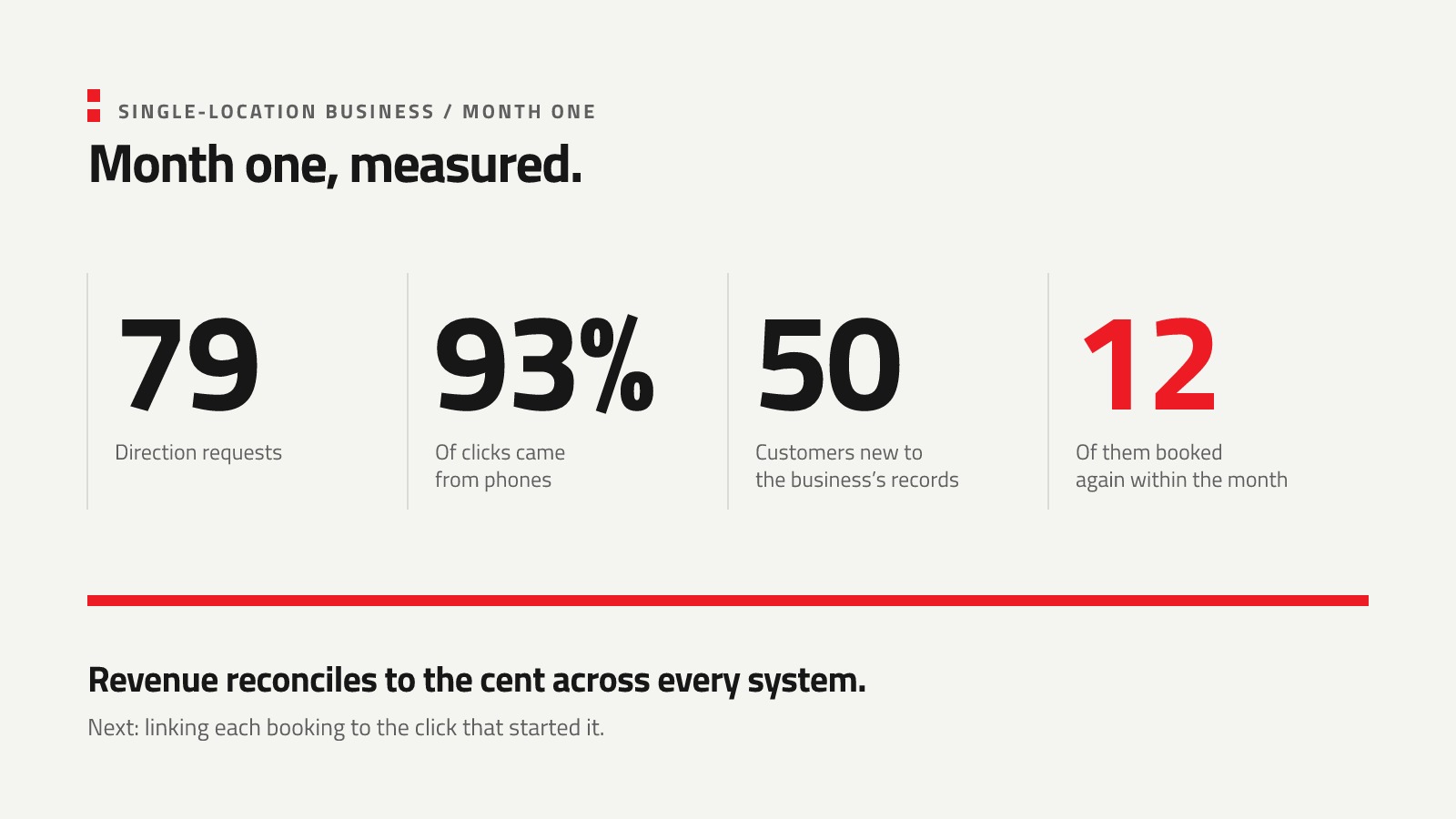
Month one is measured. The first campaign targeted one of the six validated personas and reached people with clear local intent: 79 direction requests, 4 phone calls and a 1.49% click-through rate, with 93% of clicks coming from phones. During the same month, 50 customers new to the business’s records booked a bay, and 12 of them came back at least once. Revenue reconciles to the cent across every system. The next step is closing the gap between an ad click and a booking, so the next result can be claimed, not just observed.
Case
Black Basalt Foundation
Sector
Nonprofit / cultural memory
Brand and strategy for a new foundation, built from the ground up: positioning, identity, messaging, and the program strategy behind its public work.

Campaign
Living Memory Award

The brief
A community memory award marking the first anniversary of July 2025 in Swaida, open to entrants worldwide.
Constraints
A fixed launch date. A volunteer team and a seven member jury judging remotely. Entries in Arabic and English, many with personal material. No budget for custom software or developers.
What we built
A custom application that carried every entry from submission to report, built with privacy and data security designed in from the start, to U.S. standards. Add Chapter designed the program and handled the technical setup, data tracking and analysis.
Built for the people using it
Entrants submitted once, in Arabic or English. Judges received entries sorted and ready to score. Volunteers stopped reconciling spreadsheets. Every message and result matched the record.
Figures
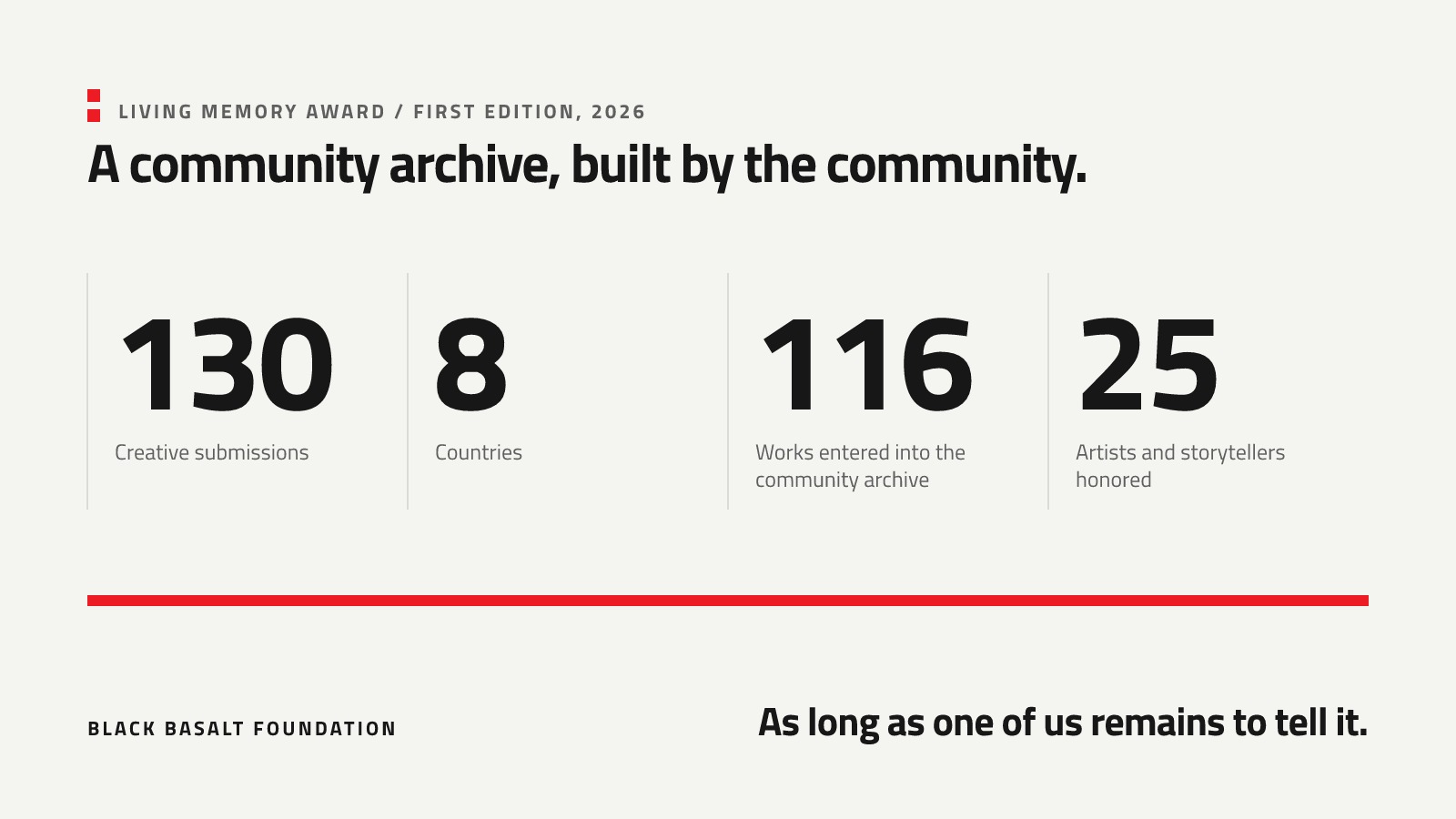
130 entries from 8 countries. 116 qualified. 7 judges plus a public vote. 25 honorees. A permanent archive and a funder ready report.
Outcome
A bigger program, on about half of what it usually takes. It ran on about $10,000 of donor money. Off-the-shelf software, developers and manual tallying would have cost at least as much again. (Estimate for this program; savings depend on scope.)

Add Chapter’s principals serve in the foundation’s leadership.
Brand and creative
Case
Boston Biopharma
Sector
Pharmaceutical
Corporate identity for a pharmaceutical company focused on affordable treatments, with website content, a corporate video and exhibition materials for CPHI Frankfurt.

Case
United Duct Supply
Sector
HVAC supply / Midwest
Brand identity, website and print for a Midwest HVAC supplier, built around one clear promise: “Tailored solutions in stock.”

Two decades of brand and campaign work preceded this. See the agency archive